|
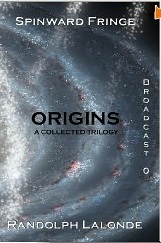
Origins
|
|
by Randolf Lalonde
|
|
Origins
|
|
by Randolf Lalonde
|
"Origins" is a somewhat usual space adventure, but told in a tapestry
that is rarely achieved in scifi. Most scifi, even some by the so-called
"masters," take a technology or theme, then write a story surrounding it. The
peripherals to the main plot are either glossed over or use exposition and
dialogue that could just as easily be written in a novel set in the present day.
This is not the case with this book. Seemingly every aspect has been
contemplated and created by the author. I am not sure when I have read a scifi
with such a rich myriad of details covering all aspects of the universe of the
story.
True, some authors have written treatises on the science of a particular
mainstay of their books, and usually in tedious detail, but in this case, the
author eschews textbook lessons and instead teaches us about his universe while
still maintaining the flow of the story. We are drawn in, and the picture the
author paints with his words gives the understanding on how and why things work.
In this regard, I believe that this may be the best scifi I have ever read.
Nowhere else have I read such attention to detail about the science, daily life,
and just about every aspect of a future setting.
That is not to write that this book is the best scifi I have read when
taking everything into account. The enormous scale of most spaceships was
impractical from a cost-benefit analysis; some ships would require the entire
annual steel output of the present-day earth just to manufacture each one. Even
with such huge ships, at one point, two ships were hurtling along in battle at
spaceship speeds only 200 meters apart, and others needed to be within a few
kilometers of their target to use major weapons systems. When they are flying at
40,000 km/sec, this just doesn't compute. This scale problem was not limited to
ships. One asteroid had terminals sprouting out from it that went for hundreds
of kilometers out into space. I didn't buy the whole old technology defeating
modern so readily. We don't use flintlocks anymore for a reason, and just
because people have forgotten about them doesn't mean that they would be
effective in battle today. There were a few anachronisms (one character using
the phrase "let's see what we have in back of curtain number 1."). And the love
interest seemed tacked on with not much meat and not contributing to the story.
Considering the breadth of the novel, though, those few issues are overwhelmed
by all the things that did work.
Overall, this is a good scifi adventure storyline, decent writing,
excellent editing, and simply outstanding attention to detail and
universe-creation. Add all of those together, this is one heck of a book that I
heartily recommend.
For more reviews
or to buy Origins from Amazon.com, click here.